China Best Dual Torch Pipeline Welding Machine Price?
China Best Dual Torch Pipeline Welding Machine Price? This question sounds simple, but the answer depends on more than the supplier’s quotation.
Industry data provides useful context. Grand View Research valued the global welding equipment market at approximately USD 16.2 billion in 2023. Its report forecasts continued growth through 2030, supported by infrastructure, energy, and manufacturing investment. The International Energy Agency also expects substantial global spending on energy infrastructure during the current transition. Pipeline welding remains part of that demand.
A Dual Torch Pipeline Welding Machine can improve productivity by supporting two welding operations in coordinated cycles. Picture a fabrication yard: two torches move around a pipe joint, while operators monitor wire feed, shielding gas, voltage, and travel speed. That coordination may reduce idle time. It does not automatically guarantee better welds.
Welding authority John C. Lippold has stated, “Welding is both a science and an art.” His observation remains practical here. Machine price must be evaluated beside weld consistency, automation level, consumable use, operator training, maintenance access, and after-sales support. A low quotation may exclude fixtures, commissioning, spare torches, or delivery costs.
Reports from MarketsandMarkets identify automation and robotic welding as important growth drivers. However, published market figures are not purchase quotations. They describe broad trends, not the final China factory price.
This guide examines realistic pricing factors, technical specifications, and supplier reliability. It also questions an easy assumption: the cheapest machine is rarely the lowest-cost solution. Performance data, test welds, warranty terms, and inspection records deserve equal attention. Small details matter. A careful comparison may prevent an expensive mistake.
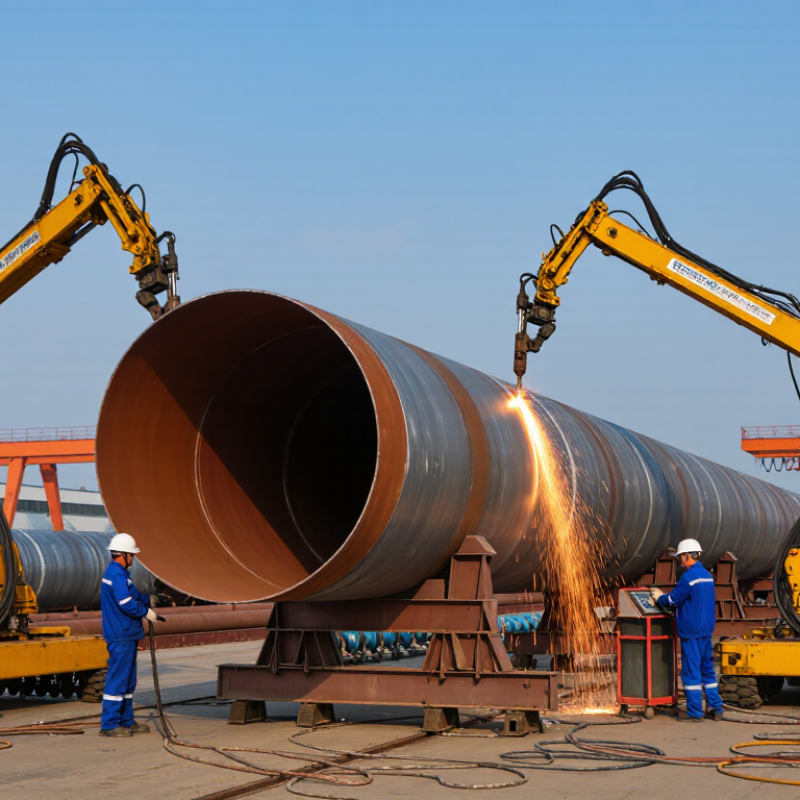
What Is a Dual Torch Pipeline Welding Machine?
China Best Dual Torch Pipeline Welding Machine Price?
What Is a Dual Torch Pipeline Welding Machine?
A dual torch pipeline welding machine uses two welding torches during one joint cycle. Depending on its design, both torches may weld simultaneously or follow separate passes. One torch can handle the root area, while the second supports hot, fill, or cap welding. This arrangement can increase deposition and reduce idle movement on long pipeline sections.
The machine usually combines a welding power source, wire feeders, torch holders, travel controls, and seam-tracking components. Accurate fit-up remains essential. Poor alignment can create uneven penetration, even with advanced automation. The American Welding Society emphasizes procedure qualification, heat-input control, and operator competence in pipeline welding. The U.S. Bureau of Labor Statistics reports about 42,600 annual openings for welding-related workers from 2023 to 2033. That labor pressure helps explain interest in mechanized systems. However, productivity claims should be checked through field trials, not brochures. Pipe diameter, wall thickness, material grade, and power requirements strongly affect China dual torch pipeline welding machine prices.
Tips: Ask for tested deposition rates, weld procedure records, torch synchronization details, and service response times. Request a sample weld on your actual pipe specification. A lower purchase price may hide costly setup problems. Also verify whether the machine supports independent torch adjustment. Some systems look dual-torch but operate with limited coordination.
China Best Dual Torch Pipeline Welding Machine Price? What Is a Dual Torch Pipeline Welding Machine?
A dual torch pipeline welding machine uses two synchronized welding torches to work on different weld sections at the same time. The required machine configuration and price depend on pipe diameter, wall thickness, welding process, automation level, and the applicable welding procedure specification.
The chart shows standard outside diameters for selected nominal pipe sizes based on ASME B36.10M dimensions. These reference sizes help determine torch reach, welding head clearance, clamping requirements, and machine compatibility. Pipe size alone cannot determine the final welding machine price.
How Dual Torch Welding Technology Works
Dual torch pipeline welding uses two synchronized welding heads on one carriage. One torch leads, while the second follows at a controlled angle and distance. This arrangement spreads heat across the joint, allowing higher deposition rates without forcing one torch to carry the entire thermal load.
On a pipe seam, the leading torch often establishes penetration. The trailing torch fills and shapes the bead. Separate wire-feed speeds can adjust each role. Travel speed, torch spacing, shielding gas, and heat input must remain synchronized. A small spacing error can create overlap or incomplete fusion. It looks simple on paper.
The 2024 World Robotics report recorded 541,302 industrial robot installations worldwide in 2023, showing stronger demand for repeatable automation.
A 2024 manufacturing workforce report also projects millions of skilled production roles may remain difficult to fill by 2030. These figures help explain interest in dual-torch equipment, especially for long pipeline projects.
China dual-torch pipeline welding machine prices vary with pipe diameter, control systems, carriage design, power source, and inspection features. A low quotation may exclude cooling units, spare torches, commissioning, or operator training. My practical concern is calibration. Poor synchronization can erase the expected productivity gain. Buyers should request bead samples, heat-input records, and duty-cycle data before comparing prices.
How to Select a Suitable Dual Torch Welding Machine
China Best Dual Torch Pipeline Welding Machine Price?
How to Select a Suitable Dual Torch Welding Machine
Choosing a dual torch welding machine should begin with your pipe requirements, not the advertised price. Measure pipe diameter, wall thickness, material, joint design, and daily production volume. A machine for thin stainless steel cannot automatically handle heavy carbon steel sections. Measure before ordering.
Check whether both torches weld simultaneously, follow separate paths, or share one control system. Confirm the power range, torch spacing, travel speed, cooling method, and compatible welding processes. Stable synchronization matters because uneven movement can create irregular beads, especially around pipe curves. Ask for test welds using your actual material and thickness.
I have found that simple controls often reduce training time and adjustment mistakes. Look for clear parameter displays, accessible replacement parts, and a frame that resists vibration. The lowest China dual torch welding machine price may exclude cooling units, fixtures, cables, or commissioning support. Request a complete quotation with these items listed separately. Also examine inspection records, operator manuals, electrical protection, and service response times. Reliability is not proven by a brochure alone. One practical weakness remains: automated dual torch systems need careful setup, and rushed operators may lose the expected productivity. Trial operation is worth the extra day.
China Best Dual Torch Pipeline Welding Machine Price? - How to Select a Suitable Dual Torch Welding Machine