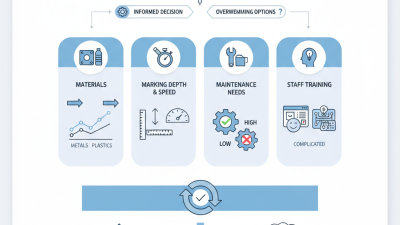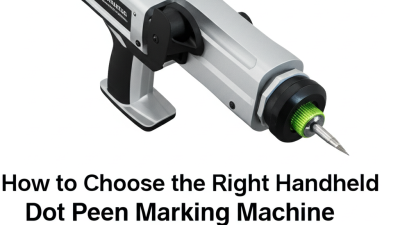
Choosing the best Industrial Marking Systems in 2026 requires more than comparing prices, print speeds, or promotional claims. Global buyers must examine production environments, material surfaces, traceability needs, maintenance access, and long-term operating costs. A system marking stainless-steel housings may perform differently on plastic caps, cartons, cables, or painted components. Small details matter.
W. Edwards Deming, a respected manufacturing quality expert, said, “Quality comes not from inspection, but from the improvement of the production process.” This principle remains highly relevant to industrial marking. Reliable identification should be built into production, not treated as a final correction. Clear codes, stable adhesion, readable characters, and consistent placement can reduce rework and costly shipment delays.
This guide evaluates leading Industrial Marking Systems for international purchasing teams. It considers laser markers, continuous inkjet printers, thermal inkjet systems, dot-peen markers, and print-and-apply solutions. Each technology has strengths. None is perfect.
Real factory conditions can be messy. Dust reaches printheads. Vibration shifts fixtures. Operators change lines under pressure. Ink behaves differently in humid rooms. Laser settings may need careful testing on reflective metals. These practical issues deserve attention before a purchase order is approved.
The most suitable system depends on the application, not the label “best.” Buyers should request sample testing, inspect service coverage, confirm spare-part availability, and calculate total ownership costs. Certification and documentation should also be checked carefully. A technically impressive machine can still disappoint without training and dependable support. This review offers a practical comparison, while recognizing that supplier data may not always reflect every production reality.
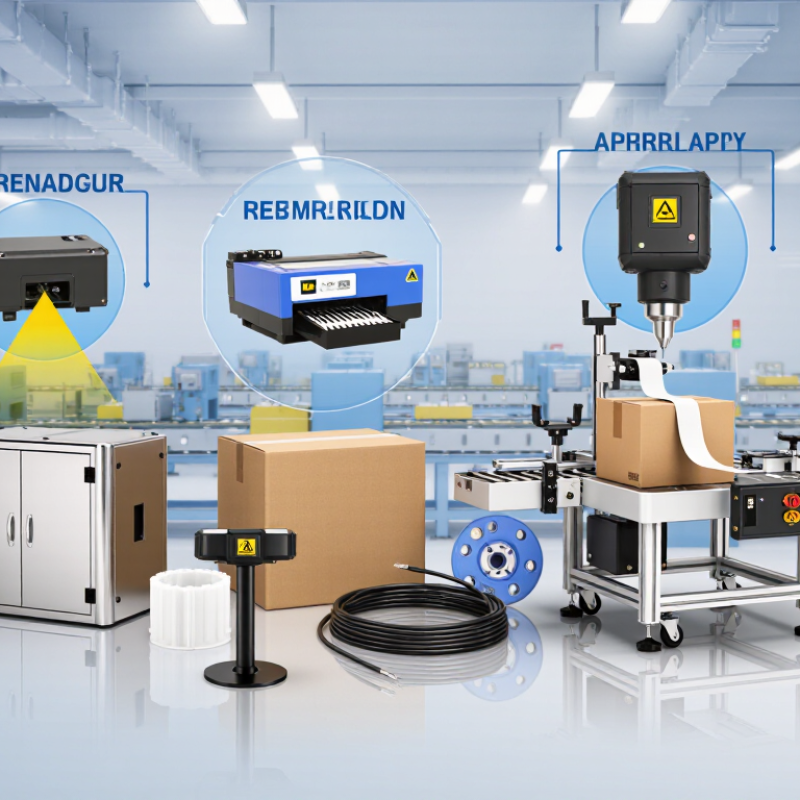
Industrial marking decisions depend on substrates, speed, moisture, and cleaning routines. Laser systems create permanent marks without ink, making them suitable for metal, glass, and some films. CIJ printers handle fast, continuous lines and irregular surfaces. TIJ offers sharp, high-resolution codes on cartons and porous materials. TTO works well with flexible packaging, especially date codes and batch information. Fortune Business Insights valued the industrial inkjet printer market at about USD 10.76 billion in 2023. It projects growth through 2030. Laser marking also continues expanding, according to Grand View Research. The figures vary by report and market definition.
Tips: Test the complete package, not a sample label. Check contrast after condensation, abrasion, and three shifts of production. Verify code readability with the same scanner used by distributors. A cheaper printer can create expensive stoppages. That part is often missed.
For global buyers, CIJ provides flexibility but needs solvent management and regular maintenance. TIJ reduces mechanical complexity, yet printhead distance matters. TTO can deliver clean results, but wrinkles may distort codes. Laser reduces consumables, although ventilation and safety controls require careful engineering. ISO 13849 and IEC 60204-1 should guide machine integration where applicable. No technology wins every line. Supplier claims need practical validation. A short pilot run may reveal more than a polished specification sheet.
2026 Best Industrial Marking Systems for Global Buyers
Laser Safety Classes and Wavelengths Under IEC 60825-1:2024
For industrial marking equipment, IEC 60825-1:2024 provides a practical framework for evaluating laser product safety. Classification depends on accessible emission, wavelength, exposure duration, and operating conditions. It is not determined by output power alone. A Class 1 system may contain a powerful internal source, but its enclosure limits accessible exposure during normal use.
Classes 1, 1M, 2, 2M, 3R, 3B, and 4 describe increasing risks. Class 2 applies to visible wavelengths, typically from 400 to 700 nanometres, where the natural blink response offers limited protection. Class 3B and Class 4 require much stricter engineering controls. Direct or reflected exposure can injure eyes and skin. Treat invisible beams seriously.
Wavelength selection also affects material response and workplace controls. Near-infrared beams can be invisible, while ultraviolet radiation may create hazards without obvious brightness. Buyers should request the declared laser class, wavelength range, accessible emission measurements, labels, interlock details, and user instructions. Check the actual installed configuration, not only the catalogue sheet. I have seen safety assumptions fail after a lens, scanner, or enclosure changes. Certification language can also be misunderstood across markets, so independent assessment may be worthwhile. Safety glasses alone are not a complete control strategy. The best purchasing decision connects the 2024 classification with documented risk assessment, operator training, and routine inspection.
Representative Industrial Laser Wavelengths and Photon Energy Under IEC 60825-1:2024
Photon energy is calculated from E = 1239.84 ÷ wavelength, where wavelength is measured in nanometres and energy is measured in electronvolts. Common industrial marking wavelengths include ultraviolet 355 nm, green 532 nm, near-infrared 808–1070 nm, and far-infrared 10,600 nm. Under IEC 60825-1:2024, laser safety classification is not determined by wavelength alone; it also depends on accessible emission, exposure duration, pulse characteristics, beam divergence, and measurement conditions. The applicable classes are Class 1, Class 1M, Class 2, Class 2M, Class 3R, Class 3B, and Class 4.
For global buyers, an industrial marking system must prove code quality, not merely print readable symbols. ISO/IEC 15415 grades two-dimensional codes from 0 to 4, or F to A. Grade 4 represents the strongest result. Grade 0 represents failure. That distinction matters.
Verification examines symbol contrast, axial nonuniformity, grid effects, unused error correction, and damaged cells. A verifier should also record aperture, illumination, wavelength, and test orientation. GS1 General Specifications connect these measurements with application rules, data structure, quiet zones, and human-readable elements. Buyers should request complete verification reports, not only a green dashboard. A single successful scan proves little.
Deloitte’s 2024 Smart Manufacturing and Operations Survey reported that 86% of manufacturing leaders viewed smart manufacturing as important to future competitiveness. That pressure makes traceable marking more valuable across factories and borders. Fixed cameras, controlled lighting, and automated rejection can reduce subjective inspections. Yet equipment settings drift. Printheads age. Surfaces change after coating or heat treatment. Verification is not decoration.
A sensible purchase specification should define the minimum acceptable grade, sampling frequency, symbol size, and escalation process. Grade 4 may be unnecessary for every application, while Grade 1 can create fragile performance margins. I would challenge any supplier promising perfect results without showing production-floor data. Real lines are imperfect, and the specification should admit that.
Industrial marking systems increasingly operate beside conveyors, coolants, metal dust, and washdown stations. The International Federation of Robotics reported 541,302 industrial robots installed worldwide in 2023. More automated lines mean greater exposure for marking equipment.
IEC 60529 defines the IP code. IP54 protects against limited dust and water splashes. IP65 adds dust-tight construction and water-jet resistance. IP66 withstands stronger water jets. IP67 supports temporary immersion, typically up to one metre for 30 minutes. IP68 covers continuous immersion under conditions agreed with the manufacturer. These ratings are not interchangeable.
High-pressure cleaning needs extra care. IP69K is widely used for hot, powerful washdown testing, but its technical basis is ISO 20653. IEC 60529 specifies IPX9, while the “K” designation belongs to the road-vehicle enclosure testing framework. That distinction matters during global procurement.
A 2024 industrial automation market analysis by MarketsandMarkets links factory expansion with rising demand for protected equipment, yet market forecasts do not replace site testing. A rating is only part of the decision. Cable glands, display seals, mounting angles, and maintenance practices can reduce real protection.
I have seen teams select IP69K equipment, then install it with poorly sealed connectors. The enclosure passed. The installation did not.
Choosing the best industrial marking system in 2026 requires more than comparing print speed. Global buyers should examine OEE, throughput, total cost of ownership, and regulatory compliance together. In plant evaluations, a machine producing 300 marks per minute may still underperform if cleaning takes 25 minutes each shift. OEE reveals this hidden loss through availability, performance, and quality data. Throughput should reflect real production conditions, including line stops, changeovers, and variable materials.
Tips: Request a live trial using your actual substrate, marking size, line speed, and shift pattern. Record rejected pieces, maintenance time, ink or consumable use, and operator adjustments. Compare these results over several days, not during one perfect demonstration. Small details matter. A smudged code on a dusty carton can create costly rework.
TCO should include installation, training, spare parts, energy, consumables, software updates, and disposal procedures. The cheapest purchase price is rarely the cheapest long-term option. Compliance also needs practical verification, such as readable batch codes, traceability records, suitable chemical handling, and region-specific labeling rules. Requirements differ across markets and product categories, so written evidence is essential. A strong evaluation may still contain imperfect assumptions. Labor rates can change, and projected uptime may be optimistic. Revisit the calculations after pilot production, then adjust the buying decision with measured data.
| System Type | Best-Fit Applications | Typical Substrates | Typical Marking Speed | Benchmark OEE | Indicative Throughput | Five-Year TCO | Consumables Cost | Typical Availability | Regulatory Compliance Considerations |
|---|---|---|---|---|---|---|---|---|---|
| Continuous Inkjet (CIJ) | High-speed coding of products, packaging, cables, and containers | Plastic, glass, metal, coated paper, flexible film | Up to approximately 7 m/s or 2,000 characters/s, depending on code and substrate | 82%–92% | 120–600 products/minute | US$35,000–US$85,000 per marking cell | US$0.20–US$1.20 per 1,000 marks | 95%–99% | Ink and solvent handling; ventilation and chemical-storage controls; electrical and machine-safety conformity such as CE, UKCA, or equivalent market requirements |
| Fiber Laser | Permanent serialization, traceability, and high-contrast marking | Stainless steel, aluminum, coated metals, engineering plastics | Approximately 100–1,200 characters/s, depending on power and code complexity | 88%–96% | 60–300 products/minute | US$70,000–US$180,000 per marking cell | Usually below US$0.05 per 1,000 marks, excluding electricity and extraction filters | 97%–99.5% | Laser class protection, interlocked guarding, warning labels, fume extraction, and applicable laser-safety standards such as IEC 60825-1 |
| CO₂ Laser | Coding on cartons, labels, wood, glass, and selected polymer films | Paperboard, paper, glass, wood, PET, painted surfaces | Approximately 80–1,000 characters/s | 86%–95% | 50–250 products/minute | US$55,000–US$150,000 per marking cell | Usually below US$0.08 per 1,000 marks, excluding extraction maintenance | 96%–99% | Laser enclosure and interlock requirements; smoke and particulate extraction; substrate-specific fire and ventilation assessment |
| UV Laser | Low-heat, high-resolution marking for sensitive or premium products | Medical polymers, electronics, glass, films, coated metals | Approximately 50–600 characters/s | 84%–94% | 30–180 products/minute | US$100,000–US$250,000 per marking cell | Usually below US$0.08 per 1,000 marks | 95%–99% | Strict laser classification and enclosure controls; UV exposure protection; extraction and validation of material compatibility |
| Thermal Inkjet (TIJ) | High-resolution text, barcodes, QR codes, and variable-data printing | Cartons, porous paper, coated packaging, selected films | Up to approximately 300 m/minute, depending on print resolution | 84%–94% | 80–400 products/minute | US$25,000–US$75,000 per marking cell | US$0.50–US$3.50 per 1,000 marks | 95%–99% | Ink safety documentation, food-contact suitability where applicable, electrical conformity, and barcode quality verification |
| Piezo Drop-on-Demand Inkjet | Large-character coding, pallet identification, and secondary packaging | Corrugated cases, wood, porous board, construction materials | Approximately 30–180 m/minute | 80%–91% | 20–150 cases/minute | US$22,000–US$65,000 per marking cell | US$0.30–US$2.00 per 1,000 marks | 94%–98% | Ink and solvent risk assessment; ventilation where solvent-based fluids are used; electrical and machinery-safety conformity |
| Print-and-Apply Labeling | Shipping labels, case aggregation, pallet labels, and logistics traceability | Corrugated cases, plastic totes, pallets, wrapped products | 20–80 labels/minute | 78%–91% | 15–70 cases/minute | US$30,000–US$100,000 per marking cell | US$4.00–US$18.00 per 1,000 labels, including label stock and ribbon where required | 93%–98% | GS1 barcode and label-data standards; guarding for applicator motion; electrical and machinery-safety conformity |
| Dot-Peening | Deep, permanent identification for parts and assemblies | Steel, aluminum, castings, automotive and aerospace components | Approximately 2–12 characters/s | 75%–90% | 5–40 parts/minute | US$20,000–US$70,000 per marking cell | Usually below US$0.20 per 1,000 marks, excluding stylus replacement | 95%–99% | Machine guarding, noise and vibration assessment, operator safety controls, and validation of mark depth and readability |
| Electrochemical Etching | Permanent logos, part numbers, and identification on conductive metal parts | Stainless steel, carbon steel, titanium, nickel alloys | Approximately 5–30 parts/minute | 72%–88% | 3–20 parts/minute | US$12,000–US$45,000 per marking cell | US$1.00–US$8.00 per 1,000 marks | 92%–98% | Chemical handling, wastewater and spill controls, personal protective equipment, and local environmental requirements |