2026 How to Improve Your Sand Molding Process for Better Casting?
The sand molding process plays a crucial role in the casting industry. This process involves creating molds from sand to shape molten metal. Improving this process can lead to better-quality castings and increased efficiency.
Many manufacturers face challenges. Issues like sand consistency and moisture content can affect the outcome. These factors require constant monitoring and adjustments. The right balance is sometimes hard to achieve. Moreover, the choice of sand can drastically influence the final product.
Reflections on past techniques reveal areas for improvement. For instance, a focus on technology might help. Automation could optimize the sand molding process, reducing labor costs and human error. Finding the perfect blend of traditional methods and modern technology is essential for advancement.
Understanding the Sand Molding Process in Metal Casting
The sand molding process plays a significant role in metal casting. It involves creating a mold from sand to form complex shapes. According to industry reports, over 70% of foundries worldwide utilize this method due to its versatility and cost-effectiveness. The quality of the sand directly impacts the casting’s finish and accuracy.
Refining the sand molding process can yield better results. Many foundries still use traditional techniques that may fall short. The blend of sand types, additives, and moisture levels is crucial. A report by the American Foundry Society highlights that inconsistent sand composition can lead to defects. Investing in advanced mold-making technologies is vital, but not always implemented.
Monitoring the process is essential yet often neglected. Regular assessments can reveal areas for improvement. For example, controlling moisture content is key. Even slight deviations may cause variations in mold strength. Foundries must remain agile and adapt to new data. The industry must reflect on these practices to enhance productivity and quality. There’s always room for refinement in the sand molding process.
Key Factors Affecting Sand Quality for Molding
The quality of sand directly impacts the molding process in casting. Coarse grain sand often leads to poor details in castings. On the other hand, fine sand can create better surface finishes. Achieving a balance is crucial. Testing different grain sizes can be a challenge. It's important to document results meticulously.
Moisture content is another key factor. Too much moisture can cause molds to collapse. Insufficient moisture may lead to cracks. Checking the water ratio frequently helps maintain stability. Regular adjustments throughout the day are necessary. It's an ongoing learning process, and experimentation often reveals unexpected results.
Chemical additives also play a role in sand quality. They can improve bonding but may alter the sand’s behavior. Understanding the right type of additives is vital. Sometimes, less is more. Overuse can complicate the process. Regular feedback on casting outcomes can guide future decisions. Each casting provides valuable lessons.
Techniques to Optimize Sand Preparation and Mixing
Optimizing sand preparation and mixing is crucial for effective sand molding. Start by evaluating the quality of sand used. The correct grain size can significantly affect mold strength. Coarse sand may lead to poor detail, while overly fine sand can create issues with permeability. A balanced mix of different sand types can yield better results.
Mixing techniques also play a vital role. Achieving uniform moisture content improves mold integrity. Too much water weakens the structure, while too little can cause cracking. It’s essential to monitor the mixing duration and speed closely. Over-mixing can introduce air pockets, impacting the final casting. Regularly testing the mixture helps identify inconsistencies early.
Even with the best practices, imperfections can arise. Mold collapses during casting or poor surface finishes are common challenges. These issues need observation and reflection to improve. Identifying the cause of failures can provide valuable insights. Continuous adjustments based on performance data are necessary for refining the process. Adjusting parameters allows for better adaptability and improved outcomes.
2026 How to Improve Your Sand Molding Process for Better Casting
Innovative Tools and Technologies for Sand Molding
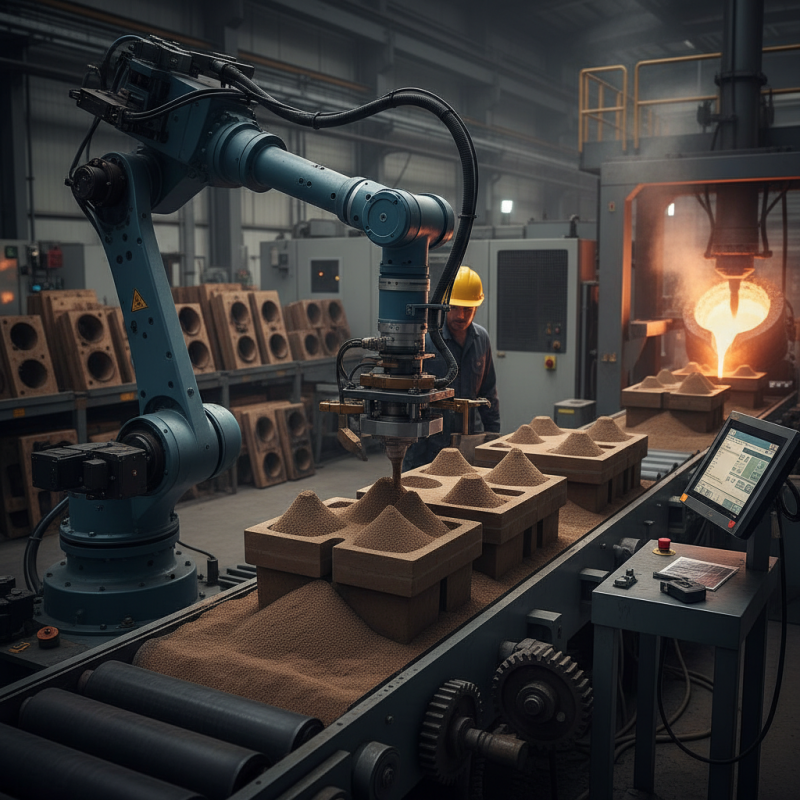
Innovative tools and technologies are reshaping the sand molding process. According to recent reports, 70% of manufacturers are adopting advanced equipment to enhance efficiency. These innovations streamline operations, reducing the time needed for each casting. Robotics and automation play significant roles in this advancement. They help in precise mold formation and can operate with minimal human intervention.
Data highlights that using 3D printing in mold design can boost production speed by 30%. This technology allows for complex shapes that traditional methods struggle to achieve. However, integrating these tools is not without challenges.
Issues can arise in scaling production. Some companies find it tough to align new processes with existing workflows. Feedback loops can become convoluted, leading to misunderstandings in production teams.
Moreover, the cost of transitioning to newer technology can be daunting. While initial investments might be high, the long-term benefits often outweigh them. Understanding the right technology and training employees adequately remain hurdles.
It's vital to assess current capabilities before diving into new tools. This reflection can prevent costly mistakes and ensure a smoother transition when adopting innovative sand molding technologies.
Best Practices for Quality Control in Sand Casting Processes
Quality control in sand casting processes is vital for producing high-quality castings. According to a recent industry report, up to 30% of defects in castings arise from inadequate mold quality. To reduce these defects, it is essential to focus on critical aspects of the sand molding process. Regular inspections of sand properties can help identify problems early. This includes checking the grain size distribution, moisture content, and clay content.
Implementing a systematic approach to data collection can significantly enhance quality control. For example, maintaining records of every sand batch tested can reveal patterns over time. Many industry leaders recommend using software to analyze this data. Even small variations can lead to significant consequences. A study highlighted that 18% of sand castings fail due to inconsistent sand conditions.
Training workers on best practices is another overlooked area. While some foundries invest in machinery, they often neglect employee education. Without proper understanding, workers may mismanage sand mix ratios. This can result in defects and increased costs. Therefore, addressing human factors in quality control can improve overall outcomes.