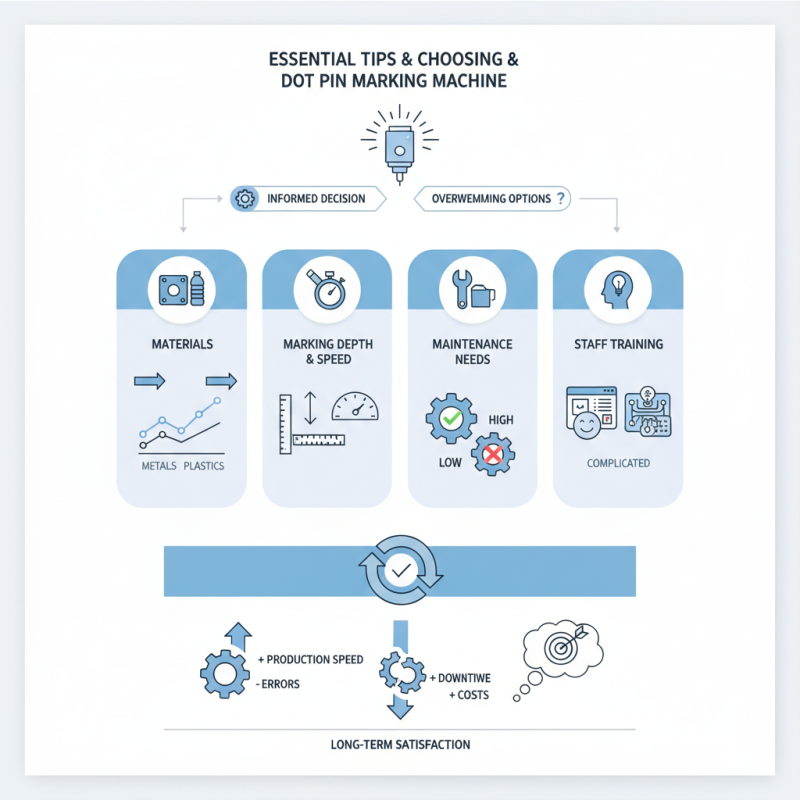
Choosing the right Dot Pin Marking Machine is essential for quality and efficiency in marking applications. With various options available, making an informed decision can seem daunting. The differences in features, specifications, and pricing can be overwhelming. An effective machine can improve production speed and reduce errors. On the other hand, a poor choice may lead to increased downtime and costs.
When selecting a Dot Pin Marking Machine, consider the materials you'll be working with. Some machines perform better on metals, while others excel on plastics. It's vital to assess the marking depth and speed required for your projects. Pay attention to the machine’s maintenance needs, as high-maintenance equipment can hinder productivity.
Don’t forget to think about training staff. A user-friendly design is crucial for smooth operations. An overly complicated machine can frustrate operators and lead to mistakes. In this guide, we will explore important tips to help you choose wisely. Making the right choice will ensure long-term satisfaction and improved marking processes.
A dot pin marking machine is vital in numerous industries. This equipment uses a pin to create marks by impacting materials. It's known for precision and durability. Industries such as automotive, aerospace, and electronics rely on this technology for part identification and traceability.
Applications for dot pin marking include engraving serial numbers, barcodes, and logos on metal, plastic, and wood surfaces. These machines are vital in ensuring compliance with quality standards. Reports indicate that the global market for marking systems is expected to grow at a CAGR of 5.2% from 2021 to 2026.
When choosing a dot pin marking machine, consider the material and size of items to be marked. Different machines handle materials differently. Additionally, evaluate the marking speed and depth. Machines that offer adjustable settings may provide better versatility.
Ensure the machine suits your operational needs. Some machines have limitations that can affect productivity. It is frustrating to invest in equipment that does not meet expectations. Prices vary significantly, so clarify features and performance before purchase. Don't overlook warranty options and technical support; these can be crucial for long-term use.
| Feature | Importance | Applications |
|---|---|---|
| Marking Speed | High-speed marking increases productivity. | Used in automotive part marking. |
| Depth of Marking | Ensures durability of marks on various materials. | Utilized in electronics for traceability. |
| Material Compatibility | Supports versatile applications across industries. | Applicable in metal and plastic part marking. |
| Ease of Use | User-friendly interfaces reduce training time. | Prominent in assembly line applications. |
| Portability | Allows for flexibility in work environments. | Ideal for on-site marking tasks. |
| Cost of Ownership | Consideration of maintenance and operational costs. | Applicable in high-volume production settings. |
Choosing a dot pin marking machine requires careful consideration of various factors. One key factor is the material of the items you plan to mark. Different materials, like metals and plastics, require specific marking techniques. According to industry reports, around 70% of businesses encounter issues when matching machines to materials. This mismatch can lead to poor marking quality and increased costs.
Another critical element is the machine's marking speed. Speed affects production efficiency significantly. Studies show that machines with higher marking speeds can increase output by up to 30%. However, faster machines may sacrifice precision. It’s essential to strike the right balance between speed and accuracy based on your operational needs.
You should also consider maintenance requirements. Some marking machines require more upkeep than others. Around 40% of companies report unexpected downtime due to neglecting machine care. Remember, maintenance not only impacts performance but also the longevity of your equipment. Continual reflection on these aspects will help in making an informed decision for your specific needs.
When selecting a dot pin marking machine, understanding the technology behind it is crucial. Dot pin marking is a popular choice due to its precision and durability. This method uses a series of pins to create an impression on the material. Common applications include metal, plastic, and ceramics. According to industry data, the dot pin marking market is projected to grow at a CAGR of 6.5% through 2026.
Tip: Always consider the materials you’ll be marking. Different machines work better with specific surfaces. For instance, harder materials require more robust machines. Take note of the machine's compatibility with your production line. It should integrate seamlessly to avoid bottlenecks.
There are a few technologies commonly utilized in dot pin marking. Pneumatic and electric versions are the most prevalent. Pneumatic machines often provide more power but can be bulky. On the other hand, electric models tend to be more compact and suitable for tight spaces. Yet, they may not have the same striking force as pneumatic ones. Evaluate the marking speed as well. Some machines can mark up to 300 characters per minute, which can drastically enhance productivity.
Tip: Consider maintenance costs as well. Regular upkeep is essential for optimal performance. Machines that are easier to maintain may save your company time and money in the long run. Reflect on the long-term implications of your choice to ensure it meets your evolving needs.
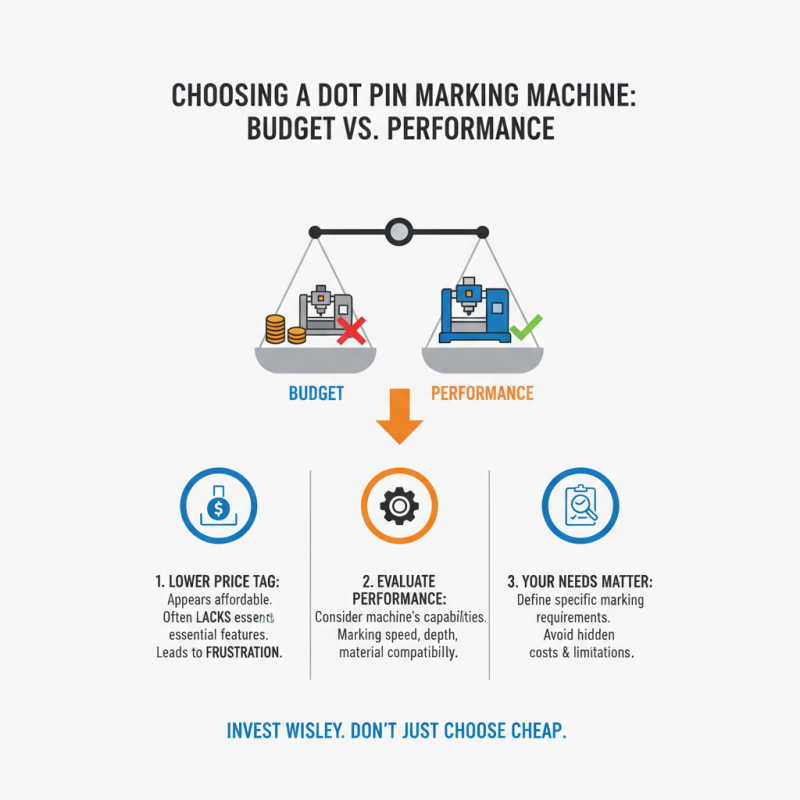
When choosing a dot pin marking machine, budget plays a critical role. You need to weigh the costs against the performance. A lower price tag doesn't always mean a good deal. Sometimes, machines that seem affordable may lack essential features. This can lead to frustration later on. Understanding your specific marking needs can help avoid this pitfall.
Consider the long-term costs tied to maintenance and durability. A cheaper machine might incur higher repair costs down the line. Look into the materials your machine will mark. Some machines perform better on specific surfaces. You might have to spend more to get reliable performance. Also, think about the volume of work you plan to do. Machines suited for high production can be costly, but they may save time and money in the long run.
Evaluating costs versus performance is crucial. It requires deeper analysis. Seek input from actual users to get insights on their experiences. Don’t rush this decision; reflect on what you learn. Each detail matters. The right balance can significantly impact your operations. Every decision shapes your production efficiency.
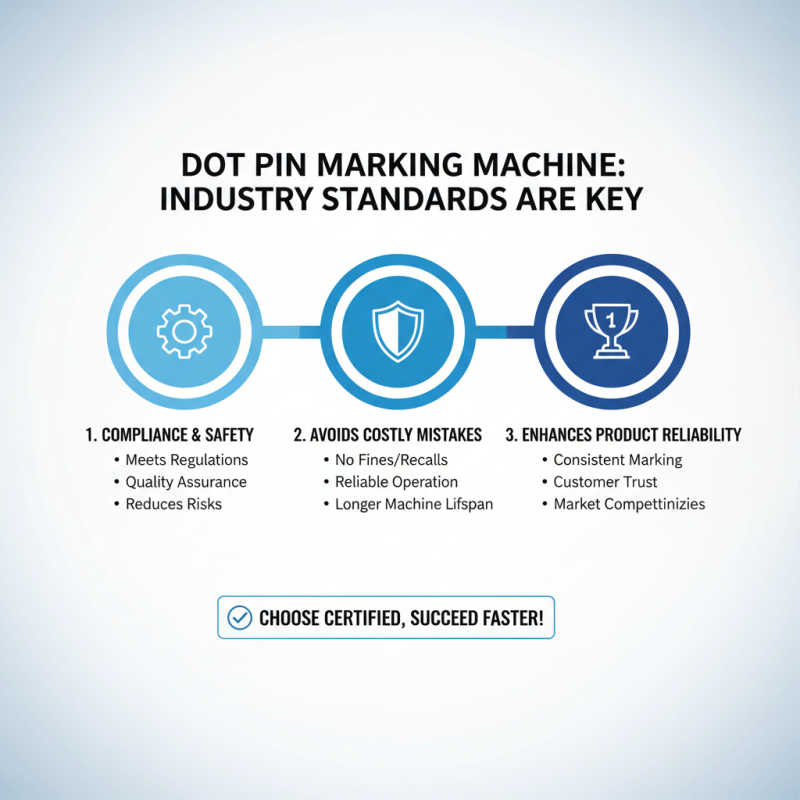
When choosing a dot pin marking machine, industry standards play a crucial role. Compliance ensures that the machine meets specific safety and quality requirements. This awareness helps businesses avoid costly mistakes. Meeting these standards can enhance product reliability, which is essential in competitive markets.
The marking process itself must adhere to defined protocols. For instance, materials marked should withstand various environmental conditions. Companies need to consider how their products will be used and the impact of marking on them. Detailed inspections and quality checks can reveal issues. Occasionally, machines might not perform as expected. This can lead to errors in marking depth and clarity.
Understanding regulatory requirements is vital. Some industries have strict guidelines regarding the types of materials used in marking. Non-compliance can result in fines or product recalls. It’s essential to do due diligence to avoid these pitfalls. Regular reviews of compliance status can improve overall operations. A proactive approach in monitoring machines helps identify potential non-conformities early on.