China’s fiber marking machine market has moved from low-cost competition toward measurable manufacturing performance. Grand View Research valued the global fiber laser market at approximately USD 5.78 billion in 2023. It forecasts an 11.1% compound annual growth rate from 2024 to 2030. Fortune Business Insights also reports steady expansion in the broader laser marking machine market. These figures suggest stronger demand for precise, durable, and automated equipment.
The best suppliers are not judged by price alone. Beam quality matters. So do pulse control, scanning speed, software stability, cooling design, and after-sales support. A factory marking stainless-steel serial numbers needs different equipment from a workshop engraving anodized aluminum panels. Small details decide production results. Sometimes, buyers overlook them.
Dr. Valentin Gapontsev, founder of IPG Photonics, once described the direction clearly: “Fiber lasers are becoming essential production tools.” His view reflects the industry’s shift toward reliable, maintenance-efficient systems. However, supplier rankings remain subjective. Product specifications can change quickly, and published performance data may not reflect long-term factory use.
This China Top 10 Fiber Marking Machine Suppliers guide therefore considers more than marketing claims. It examines laser source quality, marking consistency, integration experience, certification, user support, and application feedback. The comparison is not absolute. Readers should still test samples, inspect warranties, and verify local service before purchasing. A bright showroom is not enough. A machine must perform beside real production equipment, every working day.
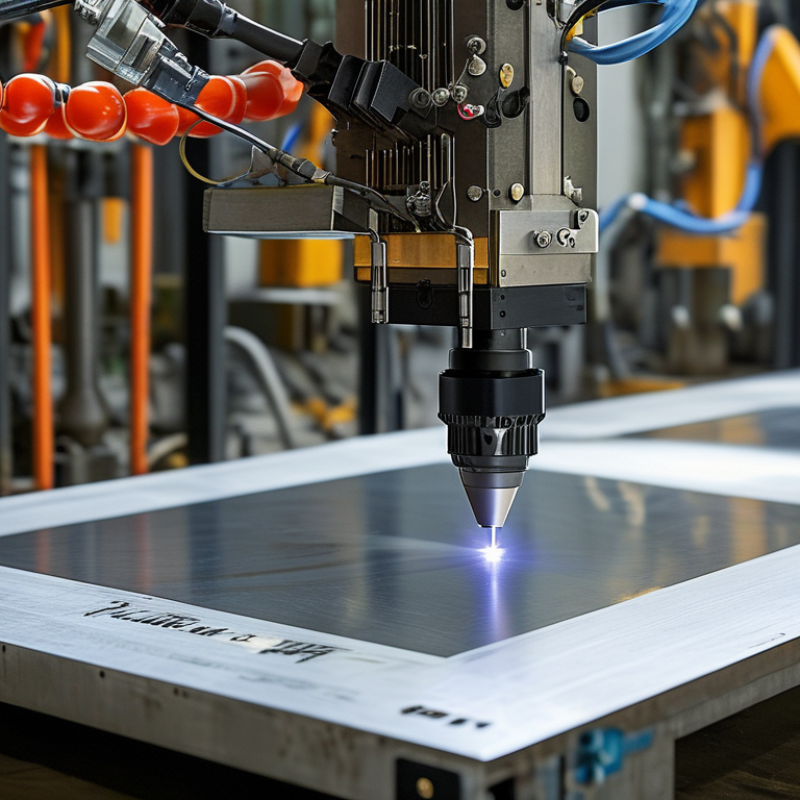
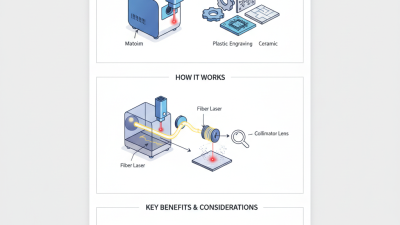
A fiber marking machine uses a focused laser beam to create permanent marks on metal and selected industrial materials. It commonly marks stainless steel, aluminum, brass, coated parts, and some engineering plastics. The fiber laser source produces light inside a doped optical fiber. Galvanometer mirrors then guide the beam across the workpiece at high speed.
The beam changes the surface through controlled heating, discoloration, engraving, or light material removal. Software converts text, numbers, barcodes, and simple graphics into scanning paths. Marking depth depends on power, speed, frequency, focus, and repeated passes. Small details need accurate focusing.
Clean and dry.
In daily production, an operator should test the same material before running a full batch. A tiny change in surface finish can alter contrast. Fixtures also matter, because movement creates doubled lines or uneven codes. I have found that “higher power” does not automatically mean better marking. Excess heat may leave rough edges or unwanted color changes. In practice, results are not always perfect.
Reliable suppliers should provide sample testing, parameter guidance, maintenance instructions, and traceable quality documentation. Buyers should examine laser stability, motion accuracy, software usability, cooling performance, and enclosure safety. Proper ventilation and trained operation remain important, especially when coatings or plastics release fumes. A supplier comparison should include after-sales response, spare-part access, warranty terms, and actual test results, not only advertised speed.
China Top 10 Fiber Marking Machine Suppliers?
Choosing among China’s top fiber marking machine suppliers requires more than comparing prices. A reliable supplier should show practical experience with metals, coated parts, and detailed serial marking. Ask for sample results using your actual material and required line thickness. Clear photographs are not enough. Review laser source specifications, galvo accuracy, cooling design, software stability, and expected service life. These details often reveal whether a supplier understands production conditions.
Supplier evaluation should also include factory communication and technical support. Request test reports, operator manuals, warranty terms, and spare-part response times. Check whether engineers can explain marking speed, pulse settings, lens selection, and heat effects in plain language. A serious supplier should accept reasonable questions without avoiding weak points. Online reviews help, but they may be incomplete. I have found that sample testing can expose uneven depth, blurred corners, or unstable software. No evaluation method is perfect.
Tips: Compare identical samples, not catalog promises. Ask for a short live demonstration. Confirm delivery records and service coverage. Keep every specification in writing. A low quotation may hide training costs or delayed parts. Also, inspect packaging and installation plans before payment. Small details matter.
This 100-point procurement model prioritizes the factors commonly used to compare industrial fiber marking machine suppliers. Marking quality, machine uptime, laser-source reliability, operating speed, software capability, after-sales support, compliance, customization, delivery, and total cost should be verified through technical documents, sample tests, and customer references. The chart presents evaluation weights rather than company-specific ratings.
China’s top ten fiber marking machine suppliers are often compared by laser stability, marking speed, service quality, and application experience. A reliable supplier should explain wavelength, power range, lens size, and expected marking depth clearly. Typical systems use 20W, 30W, or 50W sources for serial numbers, QR codes, tools, and metal components. Buyers should request test samples using their actual materials, not only polished demonstrations.
Experienced suppliers usually provide galvo scanning heads, air cooling, protective enclosures, and compatible control software. Some also offer rotary devices for rings, tubes, and cylindrical parts. During factory communication, ask about beam quality, replacement parts, calibration, warranty coverage, and operator training. These details often matter more than a low quoted price. A practical supplier should show machine videos, inspection records, and clear electrical specifications.
This top ten comparison should not be treated as permanent. Public information can be incomplete, and production quality may vary between different batches. One supplier may perform well on stainless steel but struggle with dark anodized aluminum. Another may offer strong technical support but slower delivery. I would compare at least three samples, inspect the wiring and enclosure, and confirm after-sales response before placing an order. The ranking becomes more useful when real test results support the written specifications.
China’s top 10 fiber marking machine suppliers should be compared by measurable specifications, not advertising language. Common models use 20W, 30W, or 50W laser sources at a 1064 nm wavelength. A 20W system suits serial numbers, QR codes, and light engraving on steel. A 50W unit removes material faster and handles deeper marks. Marking speeds may reach 7,000 mm/s, although real production speed is often lower.
Check the scan lens options carefully. A 70 × 70 mm field gives finer detail, while a 300 × 300 mm field covers larger parts with reduced precision. Rotary attachments support rings and cylindrical components. Software should offer text, logos, barcodes, variable data, and simple parameter control. In practical trials, stainless steel, aluminum, coated metal, and selected engineering plastics respond differently. One setting rarely fits every surface.
Service quality can decide the purchase. Reliable suppliers provide installation guidance, operator training, calibration instructions, and replacement components. Ask about response times, warranty limits, and remote diagnosis. Local technical support is valuable when alignment drifts or marking becomes uneven. A datasheet cannot prove long-term stability. I would request sample marks, power test records, and videos from comparable materials. Some suppliers respond quickly before payment, then communicate slowly afterward. That risk deserves attention. Temperature control, enclosure quality, extraction compatibility, and electrical safety also require physical inspection before regular use.
Selecting the right Chinese fiber marking machine supplier requires more than comparing prices. Grand View Research reports continued growth in the global laser marking machine market, driven by electronics, automotive, and traceability needs. This growth attracts capable factories, but also inexperienced traders. Request the supplier’s factory address, production videos, and recent export references. A polished website is not proof.
Check technical fit before negotiating. Confirm laser source power, marking speed, field size, focus method, cooling design, and software compatibility. Ask for a sample on your actual stainless steel, aluminum, or coated part.
Measure contrast, edge sharpness, cycle time, and heat impact. Small details matter. A 20-watt system may suit serial numbers, while deeper engraving can require higher power and slower passes.
Reliability needs evidence. ISO 9001 certification supports process control, but it does not guarantee machine performance. Ask for calibration records, component specifications, warranty terms, spare-part availability, and remote support response times. Independent testing laboratories accredited under ISO/IEC 17025 can strengthen inspection credibility. I would also request a written acceptance test, including output quality and positioning accuracy. Some suppliers avoid precise promises. That is a warning, although not always a failure. My own evaluation can become too focused on initial cost; installation training and downtime often matter more. Choose the supplier that documents limitations clearly, communicates consistently, and can prove performance before shipment.