
Why Choose a Fiber Marking Machine for Your Business?
Choosing the right marking technology can influence production speed, product quality, and long-term operating costs. A Fiber Marking Machine offers a practical solution for businesses that need sharp, permanent marks on metal and selected engineered materials. Its focused laser beam can create serial numbers, logos, barcodes, and technical labels with consistent detail. The process is contactless. Maintenance is often manageable. Consumables are minimal.
In real production environments, value depends on more than laser power. Material type, marking depth, line speed, software compatibility, and workspace safety all require careful evaluation. A supplier with proven installation experience can help match the machine to your applications. Ask for sample marks using your actual parts. Small differences in surface finish can affect contrast. That detail matters.
A Fiber Marking Machine may support traceability and reduce manual labeling errors. It can also improve repeatability across batches. However, it is not a magic solution. A rushed purchase can disappoint. Operators still need training, clear procedures, and routine inspections. Some materials may require different laser technology or additional testing. Businesses should compare total ownership costs, including setup, ventilation, maintenance, and technical support. Reliable documentation and responsive service are important indicators of supplier credibility. This guide examines the practical reasons companies choose fiber laser marking, while recognizing its limits. The best decision comes from measured testing, realistic production goals, and evidence rather than attractive specifications alone.
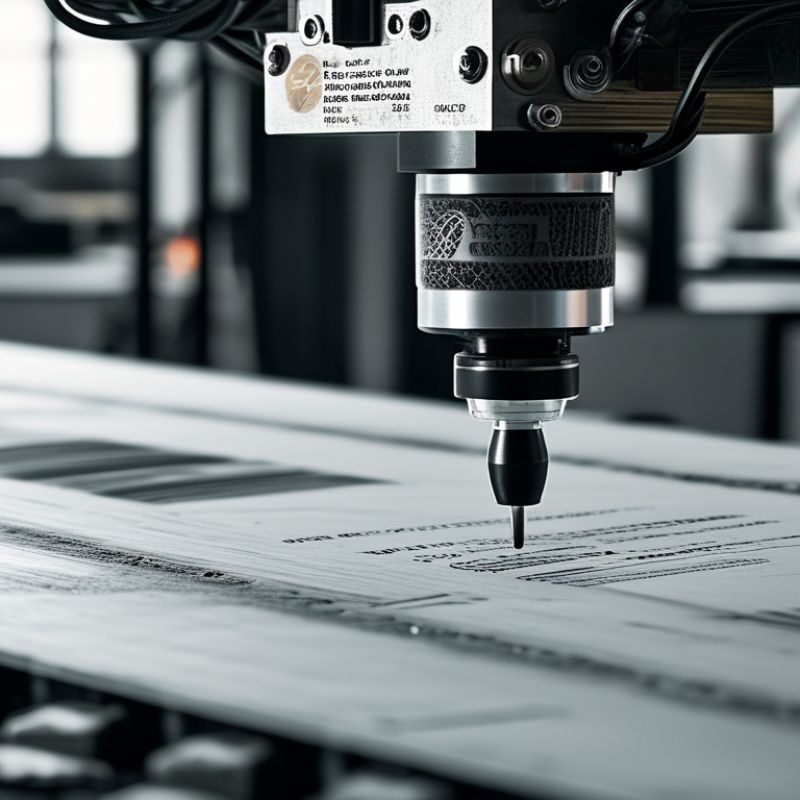
How 1064 nm Fiber Lasers Deliver High-Contrast Permanent Marks
A fiber marking machine can give businesses fast, repeatable identification on metal components. Its 1064 nm laser wavelength works especially well with stainless steel, aluminum, brass, and coated surfaces. The focused beam changes the material surface without ink, labels, or drying time. Marks can include serial numbers, measurements, logos, or traceability codes.
High contrast depends on more than laser power. Operators adjust speed, frequency, pulse width, and focus for each material. On stainless steel, a controlled annealing pass can create a dark mark with minimal surface damage. Deeper engraving removes material and improves resistance to abrasion. In practice, the best result may require several tests. A setting that looks excellent on one metal can appear pale on another. Surface oil, brushing direction, and uneven thickness also affect the final contrast. Permanent does not mean flawless.
Tips: Clean the workpiece before marking. Test a small sample first. Check the mark under normal factory lighting, not only on a bright screen. Keep the lens and work area free from dust. Record successful parameters for future batches, but review them when material suppliers change. A small adjustment can prevent blurred edges, weak contrast, or unnecessary depth.
Why Choose a Fiber Marking Machine for Your Business? - How 1064 nm Fiber Lasers Deliver High-Contrast Permanent Marks
| Evaluation Dimension | Typical Fiber Marking Machine | Why It Matters to a Business | Common Applications |
|---|---|---|---|
| Laser Wavelength | 1064 nm infrared wavelength | Efficiently interacts with many metals and supports precise, permanent marking. | Stainless steel, aluminum, brass, copper, titanium, coated metals, and some engineering plastics |
| Typical Average Laser Power | 20–50 W for general-purpose production marking | Provides a practical balance between marking speed, depth, contrast, and equipment cost. | Serial numbers, QR codes, logos, barcodes, part identification, and traceability marks |
| Marking Speed | Up to approximately 7,000 mm/s under suitable settings and job conditions | Reduces cycle time for high-volume production, although actual speed depends on material, design, and required contrast. | Automotive components, tools, electronics, hardware, and industrial parts |
| Marking Characteristics | High-resolution, low-contact, permanent marking | Produces readable identification without mechanical force, inks, labels, or consumable tooling. | Fine text, 1D and 2D codes, graphics, scales, and small component details |
| Contrast Control | Annealing, surface discoloration, engraving, and selective coating removal | Different pulse settings can create dark, light, or engraved marks while limiting unnecessary material removal. | Medical instruments, metal housings, appliance parts, and safety-related identification |
| Expected Mark Durability | Permanent when the process is correctly matched to the material and application | Marks can remain readable after routine abrasion, handling, cleaning, and environmental exposure. | Product traceability, anti-counterfeiting, compliance labels, and warranty identification |
| Consumables | No ink, solvent, stencil, or adhesive label is required for direct marking | Can simplify inventory management and reduce recurring marking-material costs. | Lean manufacturing, automated production lines, and low-maintenance work cells |
| Maintenance Profile | Generally low maintenance because the optical source is solid-state and non-contact | Supports consistent operation with fewer routine replacements than many ink-based systems. | Production environments requiring repeatable daily operation |
| Typical Source Lifetime | Often specified at more than 100,000 operating hours, depending on the laser source and conditions | A long-rated source life can support predictable equipment utilization and lower replacement frequency. | Long-term factory use and integration into automated manufacturing systems |
| Positioning Accuracy | Typically in the micrometer range for the scanning system, subject to machine configuration and calibration | Helps place small characters, codes, and graphics consistently on repeat parts. | Precision components, electronics, gauges, and compact metal products |
| Typical Marking Area | Common standard fields include approximately 70 × 70 mm to 200 × 200 mm | The available field size determines the maximum single-pass marking area and lens selection. | Small parts, panels, nameplates, tools, and batch-marking fixtures |
| Operating Cost Factors | Electricity, scheduled cleaning, software, ventilation or fume extraction, and periodic calibration | The total cost depends on power, duty cycle, material preparation, safety equipment, and integration requirements. | Businesses comparing total cost of ownership rather than purchase price alone |
| Key Selection Considerations | Material type, desired contrast, mark depth, throughput, field size, automation, and safety enclosure | Correct process selection is essential for achieving a readable mark without excessive heat or unwanted surface damage. | Prototype work, contract manufacturing, batch production, and fully automated lines |
Note: Performance figures are typical industry ranges. Actual results vary with material composition, surface finish, lens choice, pulse settings, marking layout, workholding, and machine configuration.
Related Posts
-
China Top 10 Fiber Marking Machine Suppliers?
-
Advantages of Using Fiber Marking Machines for Global Procurement
-
Revolutionizing Manufacturing: How Fiber Marking Machines Enhance Precision and Efficiency in Industrial Applications
-
Top 10 Fiber Marking Machines for Global Buyers in 2026?
-

Future Trends in Fiber Marking Machines How Automation Will Shape Industry Standards by 2025
-
Ultimate Guide to Choosing the Right Fiber Marking Laser for Your Business Needs